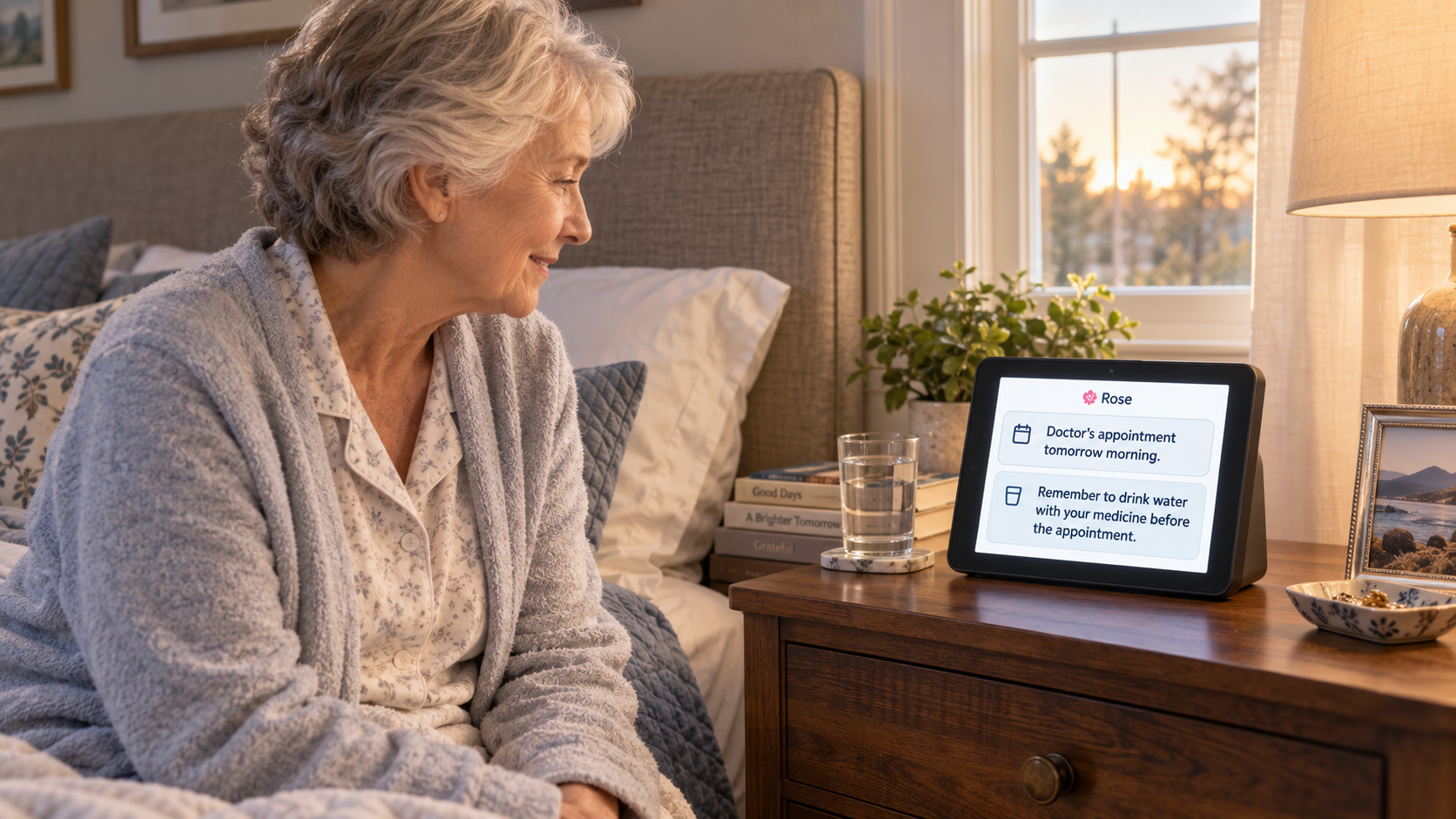
Who Rose Is
This isn't cold technology. Rose is a way of being with someone: patient, warm, present, built around a single idea, meet people exactly where they are in their journey, not where the world expects them to be.
She doesn't rush. When a word won't come, she waits, then offers a gentle nudge, a name, a detail, just enough to help the sentence finish itself, so the conversation never stalls out. She doesn't correct, either. When someone believes a moment from years ago is happening again, Rose doesn't argue with the feeling, she responds to it, gently, the way someone who truly understands would. That's not a technical feature. That's compassion, built into how she listens and how she answers.
Rose is an emotional companion as much as a practical one. Even the most loving families don't always know the right way to respond when a memory doesn't match reality, or when the same question comes back for the tenth time that day. It's exhausting, and it's human to slip, to correct, to sigh, to explain again with a little less patience than the time before. Rose doesn't have that limit. She meets confusion, repetition, and grief the same way every time, with a steadiness that dementia care asks for and that people, understandably, don't always have left to give.
For the person living with cognitive decline, Rose is a comforting voice, someone who already knows their stories, their people, their history, so no conversation ever has to start from zero. For the caregiver, she's something else entirely: a relief valve. A place to set down some of the weight, if only for a few minutes, because there's someone there who can hold a piece of the care alongside them.
It's hard to describe, and hard to imagine, that something built from code and circuitry can convey real kindness. But that's exactly what Rose is built to do: bring real comfort to the people who need it, patiently, consistently, without judgment, for as long as someone needs her there.